Fast, Reliable ADU Builders Across Banning
Banning homeowners call us when they want a straight answer on accessory dwelling units: what fits the lot, what the city will approve, and what it actually costs to build. We’re ADU Builders who work the San Gorgonio Pass corridor every week, so the wind loads, dust, older panels, and wide-lot setbacks that shape a Banning project are things we plan for from the first site visit, not surprises we discover mid-build. If you’re weighing a detached unit, a garage conversion, or a prefab delivery on your property in 92220, call (877) 265-5812 for a free estimate and we’ll tell you what your lot can realistically support.
Why Orange ADU Builders Is Banning’s Preferred ADU Builders Company
Banning is not a generic inland market, and we don’t treat it like one. The lots off Sunset Avenue, Hargrave Street, and up toward the Banning Bench are wider than what you see in Beaumont or Cherry Valley, which is good for a detached ADU, but the pass winds that move through here change how you anchor, seal, and schedule a build. Homeowners in Banning tell us the same thing: they want a builder who already knows what the city will ask for at plan check and what the wind will do to the roof once the unit is up. Nelson Ybarra leads our team, and he’s built our process around the specific conditions that Banning lots present: older service drops, wind-exposed roof planes, and neighbors who care about dust staying on the right side of the property line.
We don’t ask Banning homeowners to choose between a prefab brand and a site-built unit. We work across Abodu, Cover, and Dvele, plus custom site-built construction, so you compare real options side by side. Choose the ADU that fits your lot, budget, and timeline, not just the one we happen to build. That distinction matters here because a unit that performs well on a calm Riverside subdivision will not automatically hold up on an exposed Banning Bench lot with sustained spring gusts.
ADU Design in Banning
ADU Design in Banning starts with wind, not floor plans. The San Gorgonio Pass funnels air through this corridor harder and steadier than almost anywhere in Southern California, so we size roof tie-downs, uplift strapping, and envelope sealing for gust loads before we talk about cabinet layouts or window placement. A well-designed Banning ADU is anchored against wind, sealed against dust, and sited so the unit doesn’t turn your backyard into a wind tunnel. What does that cost? A design-and-permit package for a detached ADU in Banning typically runs $8,000 to $15,000, and full design-build projects usually land between $180,000 and $280,000 depending on square footage, foundation work, and utility upgrades. On lots in 92220 that have never had a second structure, the design phase is where we catch panel undersizing and setback issues that become much more expensive to fix after framing starts.
Wind-Rated Roof and Envelope Design
The roof of a Banning ADU does more work than the roof of a Beaumont ADU. Sustained pass winds lift shingle edges, peel lightweight roof panels, and drive fine dust into any unsealed penetration. Our design standard here includes uplift strapping at every truss, sealed penetrations at vents and conduit, and James Hardie fiber-cement exterior products because a 30-year exterior matters on a unit that gets sand-blasted every spring. Banning is where we specify more robust roof-to-wall connections than the plan minimum, because the minimum was not written for this wind corridor.
Service and Panel Upgrades
Many Banning homes were built when a 100-amp panel was plenty for one house. Add an ADU with a kitchen, mini-split, and laundry, and that panel is done. During ADU design on older Banning lots, we check the existing service drop, panel rating, and feeder capacity before we finalize unit size. If the tie-in requires a service upgrade to 200 amps, that’s typically $3,500 to $6,000 in Banning, and it’s far cheaper to plan for it at design than to discover it at rough-in. Older homes on the city’s mid-century tracts are the ones that catch this most often.
Backyard ADU in Banning
A Backyard ADU in Banning has to be sited for wind exposure first and aesthetics second. The city’s wide lots give you room to work with, which is a genuine advantage over tighter coastal parcels, but that same openness means the unit gets hit with the full force of pass gusts without neighboring structures to break the wind. We anchor detached units for uplift, dust-seal every exterior seam, and keep the build site staged tight so materials don’t end up in a neighbor’s yard. A detached backyard ADU in Banning’s market typically runs $190,000 to $300,000 depending on size, finishes, and whether you need foundation work, a service upgrade, or a fire-sprinkler system. Garage conversions run lower, usually $120,000 to $180,000, because the shell and foundation already exist.
Detached Unit Siting and Anchoring
Where you put the ADU on a Banning lot changes how hard the wind hits it. We look at prevailing gust direction, the position of the main house, and how the roofline will shed wind rather than fight it. On one wide, exposed lot off the Banning Bench area, our crew sited a detached backyard ADU and found the old panel and service drop underrated for the tie-in, so we upgraded the service before framing. We strapped the James Hardie-clad roof panels for uplift, sealed every penetration against pass dust, and staged materials tight to the driveway so wind didn’t scatter them onto the neighbor’s property line. The wind-rated detail work added crew time but kept the finished unit tight through the spring gusts.
Foundation and Dust Sealing on Wind-Exposed Lots
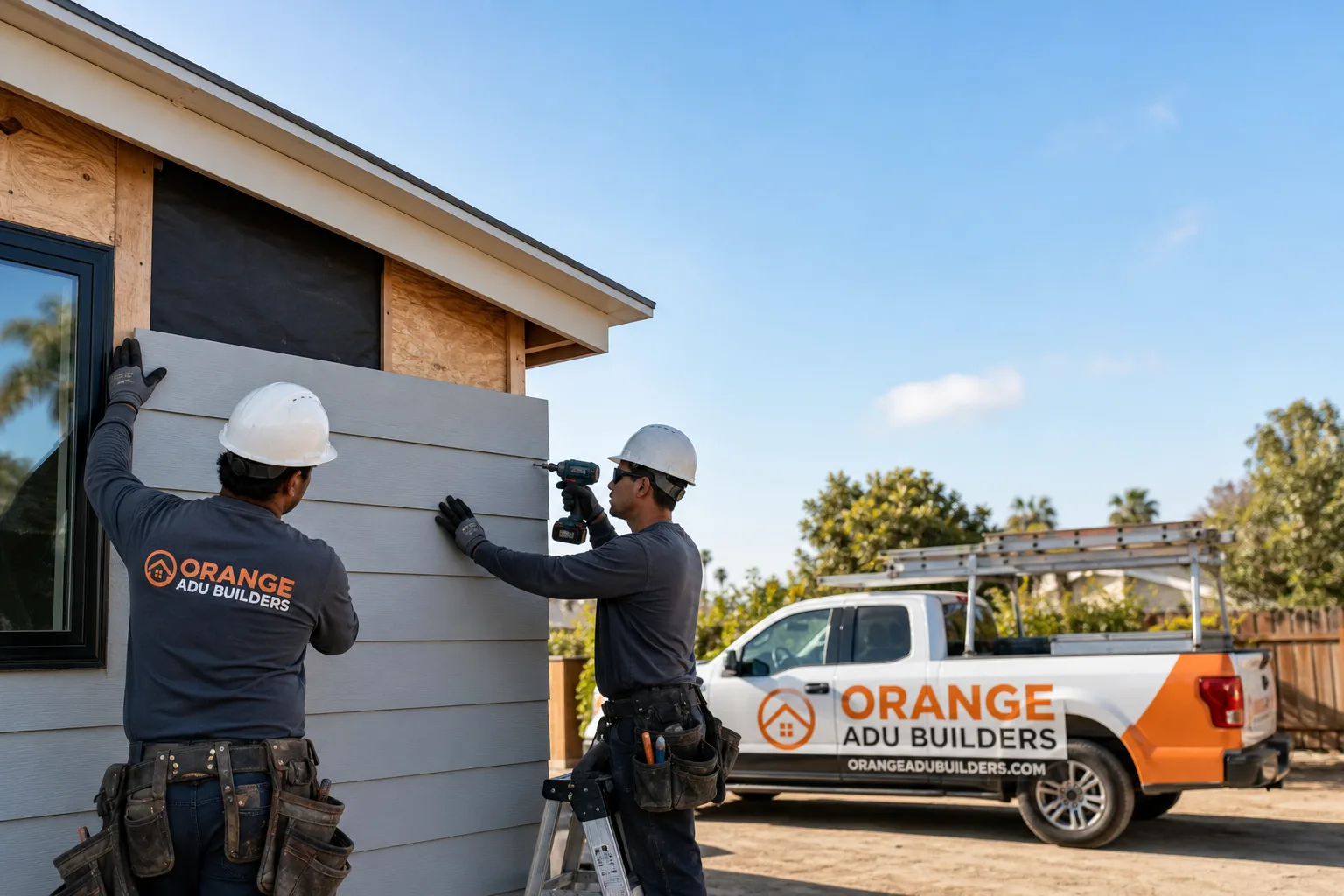
A Banning ADU needs a foundation that stays put and an envelope that stays sealed. We spec hold-downs and anchor bolts beyond code minimums on exposed lots, because the same gusts that lift shingles also work on the structure over time. Dust is the quiet problem: it finds its way into wall cavities, around windows, and under door sweeps on breezy lots. We seal penetrations during construction, not after, and we choose exterior cladding that holds up when wind-driven dust starts working on it. James Hardie exteriors are the standard we recommend here because fiber cement doesn’t get sand-blasted the way wood or vinyl does.
Trusted Brands We Service in Banning
We’re experienced with Abodu, Cover, and Dvele prefab systems, and we can walk you through how each one performs in Banning’s specific conditions before you commit. Prefab delivery looks appealing because the unit arrives mostly built, but the foundation, tie-downs, utility connections, and wind-rated anchoring still have to be done right, and that’s where our Banning experience matters. We keep the site ready for prefab placement, coordinate crane or tilt-up delivery on narrow access lots, and handle the tie-in work so the manufacturer’s warranty stays intact. If you’re comparing prefab against site-built, we’ll give you honest numbers for both paths and let you decide which fits.
Common ADU Builders Problems We See in Banning Homes
Banning’s housing mix, mid-century tracts plus rural-edge properties, creates a predictable set of issues on ADU projects. Here’s what we run into most often in 92220:
- Undersized service drops and panels. Homes built in the 1950s through 1980s frequently have 100-amp services that can’t carry an ADU’s load. We identify this during design and upgrade before framing, not after the unit is wired.
- Roof uplift and shingle damage on existing structures. The same pass winds that stress a new ADU roof have been working on the main house for decades. When we tie a new unit in, we often find existing roof edges that need strapping or repair before the ADU goes up.
- Loose staging and wind-blown debris on exposed lots. Construction materials left unsecured on Banning’s windy weeks end up against a neighbor’s fence or in their yard. We stage tight, strap down everything, and keep the site clean so we don’t create a nuisance.
- Setback and utility-tie-in surprises on older lots. Some Banning parcels have nonconforming setbacks or gas and sewer runs that were installed before current codes. We check the city’s requirements during design so the permit path doesn’t stall.
Pricing for ADU Builders in Banning, CA
A garage conversion in Banning typically runs $120,000 to $180,000. A detached one-bedroom ADU usually lands between $190,000 and $260,000, and a two-bedroom unit on a wind-exposed lot with a service upgrade can run $240,000 to $300,000. The factors that move your number in Banning specifically: wind-rated anchoring and roof strapping (adds $4,000 to $9,000 over a calm-climate build), panel and service upgrades on older homes ($3,500 to $6,000), and foundation work on lots with expansive or unstable soil. Prefab units with Abodu, Cover, or Dvele typically land in the $180,000 to $280,000 range installed, including site work and tie-ins. Every estimate we give is free, written, and line-itemed. Call (877) 265-5812 and we’ll put real numbers on your specific lot.
We Also Serve Cities Near Banning
Orange ADU Builders serves the full San Gorgonio Pass corridor. If you’re in Cabazon, Calimesa, Yucaipa, or Valle Vista, we’ll bring the same wind-rated design standards and straight pricing we use on Banning lots. Each of those areas has its own conditions, but the pass wind, older housing stock, and wide-lot challenges carry over. Wherever you are in the corridor, we can help you compare prefab and site-built paths.
Serving Banning, CA — Our Local Coverage Area
We’re based in the Banning area and know this community well. Use the map below to see our service coverage — if you’re nearby, we can almost certainly help.
FAQs About ADU Builders in Banning
Banning sits directly in the San Gorgonio Pass wind corridor, which produces sustained gusts that Beaumont and Cherry Valley don’t get with the same force. Your ADU roof here needs uplift strapping, sealed penetrations, and wind-rated exterior products to handle lift and sand-blasting that a calmer inland city never sees. That engineering adds roughly $4,000 to $9,000 to a detached Banning ADU compared to a less exposed site, and it’s not optional. Call (877) 265-5812 if you want us to look at how exposed your specific lot is.
In most cases on Banning’s mid-century and later tract homes, no. A 100-amp panel that was fine for one house cannot legally or safely carry an ADU with a kitchen, HVAC, and laundry. We’ll check your service drop and panel rating during the design phase, and if you need an upgrade to 200 amps, that’s typically $3,500 to $6,000 in Banning. Better to know that before framing starts than to have the utility company red-tag your tie-in later.
We stage materials tight to the driveway or garage, strap down anything lighter than a sheet of plywood, and schedule debris removal before the afternoon winds pick up. On Banning wind weeks, loose packaging, insulation, and cutoffs end up in neighbors’ yards if they’re not secured, and that strains the relationships you have to live next to after we’re gone. Our crew treats the wind as a daily condition, not an occasional problem, and we keep the site swept and contained from day one.
Detached backyard ADUs and garage conversions work well on Banning’s large single-family lots, because you have the side and rear yard space that tighter inland cities lack. A detached unit lets you orient the roof to shed pass wind instead of fighting it, and a conversion uses an existing shell that already sits on a foundation. Junior ADUs inside the main house also work, but Banning’s wide lots usually make a detached unit the better long-term rental or family-housing play.
You don’t legally need neighbor permission for a permitted ADU that meets the city’s setback and height rules, but on Banning’s wide, wind-exposed lots, a construction site that isn’t contained can create real friction. We stage materials tight, keep work hours within the city’s noise ordinance, and make sure dust and debris stay on your property. A quick heads-up to adjacent neighbors before we start goes a long way, and we’ll help you handle it.
Written by Nelson Ybarra, Owner at Orange ADU Builders, serving Banning and the San Gorgonio Pass corridor.